
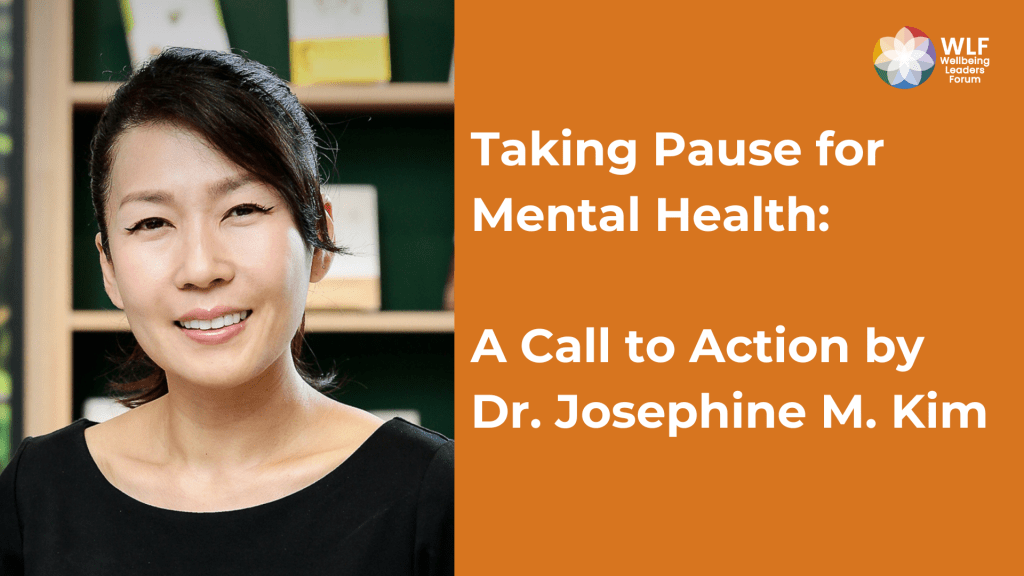
At the Wellbeing Leaders Forum, Dr. Josephine M. Kim emphasized the importance of “taking pause for mental health”, as mental health impacts all of us, not just those diagnosed with a mental illness.
Dr. Kim shared striking statistics: one in eight people worldwide—approximately 450 million—live with a mental condition. Depression is the leading cause of disability globally, with anxiety and depressive disorders most prevalently affecting those aged 20 to 59. This period aligns with the pressures of “adulting,” such as career and education stressors. However, mental health challenges often begin earlier making childhood and adolescence crucial intervention points.
She introduced the concept of “toxic stress,” citing Centers for Disease Control and Prevention research that showed a three-year-old experiencing normal development has significantly stronger neural activity than a child suffering from extreme neglect and toxic stress. She emphasized that 50% of all lifetime mental health conditions begin by age 14 and 75% by age 24 with suicide being the third leading cause of death for individuals aged 10 to 24 in the U.S.
Dr. Kim advocated for a shift in how educators are viewed, referring to the Latin root of the word ‘educator’ which is defined as someone who gives intellectual, moral, social, and emotional guidance As an example of an approach to supporting students, she introduced the Multi-Tiered Systems of Support (MTSS) model, which provides universal emotional health education (Tier 1), targeted support (Tier 2), and intensive interventions (Tier 3). She stressed that prioritizing Tier 1—teaching emotional literacy, resilience, and mindfulness—can prevent severe mental health issues later. Schools must integrate these practices early to equip students with the skills needed for long-term mental well-being.
She also underscored the link between mental and physical health, warning that removing physical education in favor of academics is counterproductive. Research shows that regular movement improves academic and emotional performance. However, many school systems cut physical activity despite its proven benefits in reducing stress and improving concentration. Short movement breaks throughout the school day can positively impact students’ mental well-being.
Another major issue is sleep deprivation. Dr. Kim noted that many students get only four to five hours of sleep per night, increasing their risk of anxiety and depression. Sleep is essential for cognitive function, emotional stability, and overall health. She proposed an unconventional approach—assigning sleep as “homework”—to emphasize its critical role in maintaining mental health.
In addition, Dr. Kim went on to explain that emotional pain is as real as physical pain, as the same brain regions process both. Hurtful words like “You’re worthless” activate the same neural pathways as a physical injury, reinforcing the need for strong emotional support systems. She stressed that early intervention and open discussions about mental health can reduce the long-term impact of emotional trauma.
To further highlight the need for systemic change, Dr. Kim pointed to the increasing demand for schools to provide mental health resources. Schools that implement structured social-emotional learning (SEL) programs see improved academic performance and well-being. When students feel emotionally secure, their ability to learn and succeed increases. Governments and education ministries must recognize the importance of SEL and prioritize it in school curricula.
Dr. Kim called for collaboration between families, schools, communities, and policymakers to create systemic support structures for mental health. She emphasized that well-being requires a holistic balance of intellectual, emotional, social, and physical development. By working together, society can ensure that mental health is valued as much as physical health, ultimately fostering a healthier, more resilient generation.
Editor ー Miki Yamaoka

Having moved between New Zealand and several other regions since childhood, Miki grew up in an environment where diversity was the norm. She graduated from medical school in Hungary and is passionate about contributing to wellbeing beyond the walls of hospitals as a clinician.
 Wellbeing Leaders Forum
Leave a comment