
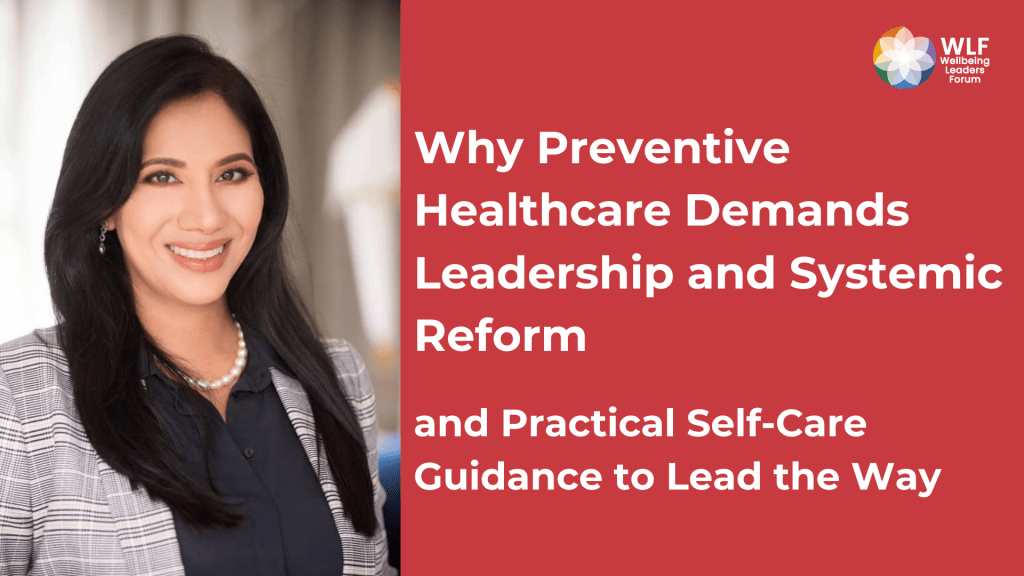
Dr. Anuschka Coovadia addressed the Wellbeing Leaders Forum on the importance of preventive healthcare in shaping a resilient global health system. She emphasized that healthcare and wellness account for 10-15% of any economy, making it a major global industry and employer. However, she noted that self-care is often neglected, addressing its importance particularly among leaders, whose example influences those around them.
She highlighted a shift from reactive, hospital-based care to a proactive model focused on prevention, integration, and patient-centric services. Healthcare is no longer just about treating illness but about sustaining health and well-being. Individuals must take ownership of their health, as only 5% of our time is used interacting with healthcare professionals, whereas the rest is dependent on self-care, particularly in managing chronic diseases like diabetes, hypertension, and heart disease.
Dr. Coovadia identified four major barriers to self-care: increasing responsibilities, physical health challenges, mental health struggles, and societal time constraints. She stressed the need for balanced diets, hydration, regular exercise, and health screenings, noting that up to 35% of healthcare issues can be prevented through early detection.
She detailed fundamental self-care strategies, emphasizing the importance of maintaining a whole-food diet rich in fruits, vegetables, lean protein, and whole grains. Hydration, with at least eight glasses of water daily, supports cellular function and energy levels. Exercise, she noted, should prioritize consistency over intensity, incorporating daily movement, resistance training, and flexibility exercises like yoga to improve metabolism, support bone health, and reduce fall risks.
Dr. Coovadia underscored the significance of regular health screenings to detect potential issues early. She noted that simple checks for blood pressure, glucose levels, and cholesterol, along with cancer screenings, could dramatically improve long-term health outcomes. She emphasised the need for setting screening schedules and creating personalised healthcare plans based on identified risks. Mental health, another growing concern, requires a focus on mindfulness, cognitive engagement, and fostering strong social connections to combat isolation. Self-awareness, she argued, is essential for well-being, and individuals should develop coping mechanisms such as meditation, journaling, or therapy to process trauma and stress.
She also addressed lifestyle factors, emphasizing the importance of quality sleep, financial well-being, and time management in overall health. Sleep hygiene, including a dark and cool environment, reduced screen exposure before bedtime, and a structured routine to secure 7-9 hours of uninterrupted sleep, is critical. Additionally, she highlighted the dangers of excessive alcohol consumption, smoking, and substance abuse, reinforcing the World Health Organization’s guideline of a strict limit of two alcoholic drinks per week.
As part of this lifestyle approach, she outlines a practical daily routine to support physical and mental energy. She suggests breaking the day into three key slots: morning, midday, and evening.
In the morning, exposure to natural light helps regulate hormones and improve sleep quality, while hydration, moderated caffeine intake, and moderate-intensity exercise support energy and alertness.
At midday, she recommends a balanced, lower-carb lunch to prevent energy crashes, a short walk to aid digestion and metabolism, and brief rest periods like a 10-20 minute nap or deep relaxation to boost dopamine and mental energy.
In the evening, she advises a nutritious, carb-rich dinner to prepare the body for rest, reducing artificial light exposure, and establishing a sleep routine.
Expanding the discussion to systemic healthcare, Dr. Coovadia advocated for an ecosystem approach, ensuring that patients receive the right care at the right time, in the right place, and at the right cost. She stressed the need to integrate sustainability into healthcare strategies, recognizing the interplay between environmental health and patient outcomes. Climate change, she warned, exacerbates healthcare challenges through pollution and extreme weather, necessitating a commitment to sustainable medical practices.
She further warned of an anticipated global shortage of 16 million doctors by 2030, making digital healthcare solutions and localized medicine production crucial. She called for universal health coverage, stronger government investment, and public-private partnerships to optimize healthcare accessibility (Boniol et al., 2022). Governments, she emphasized, must take active roles in ensuring equitable healthcare access while leveraging private sector innovations to enhance efficiency and effectiveness.
Concluding her address, Dr. Coovadia urged leaders to practice “healthy selfishness”—prioritizing their own well-being to set an example for others. She reinforced that self-care is not a luxury but a necessity for sustainable leadership and systemic healthcare transformation.
Bibliography
- Boniol, M., Kunjumen, T., Nair, T. S., Siyam, A., Campbell, J., & Diallo, K. (2022). The Global Health Workforce Stock and distribution in 2020 and 2030: A threat to equity and ‘Universal’ Health Coverage? BMJ Global Health, 7(6). https://doi.org/10.1136/bmjgh-2022-009316
Editor ー Miki Yamaoka

Having moved between New Zealand and several other regions since childhood, Miki grew up in an environment where diversity was the norm. She graduated from medical school in Hungary and is passionate about contributing to wellbeing beyond the walls of hospitals as a clinician.
 Wellbeing Leaders Forum
Leave a comment